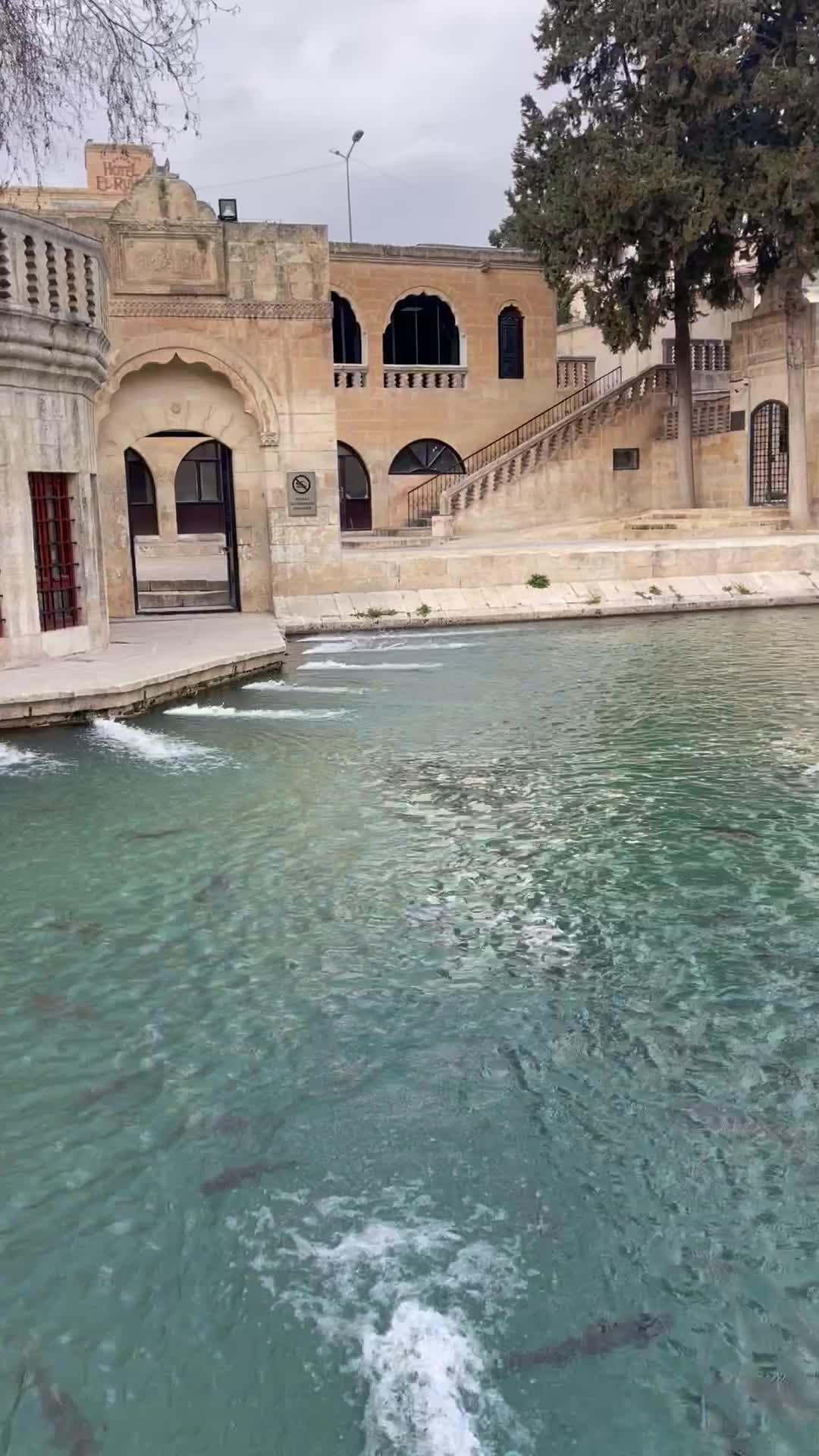
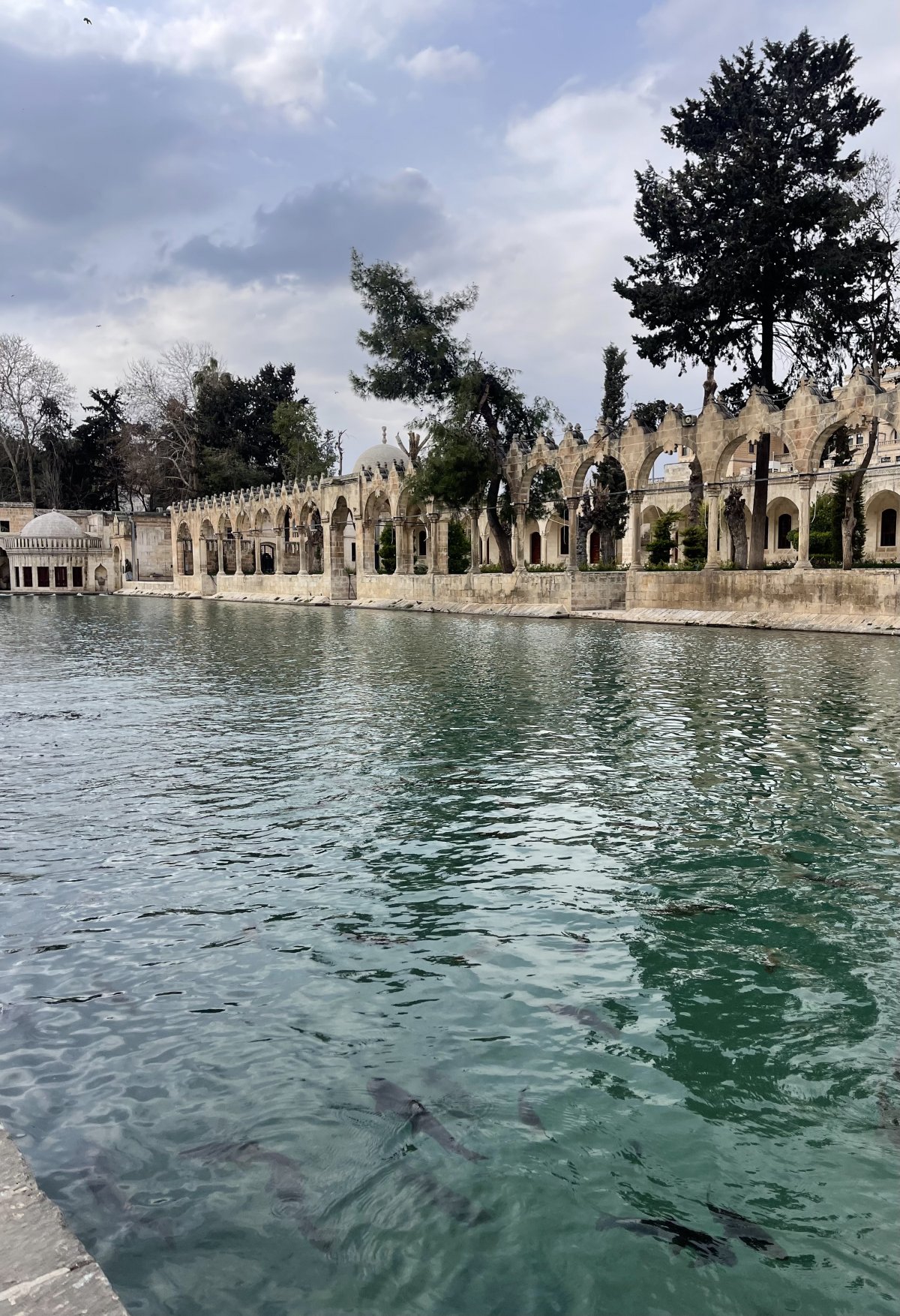
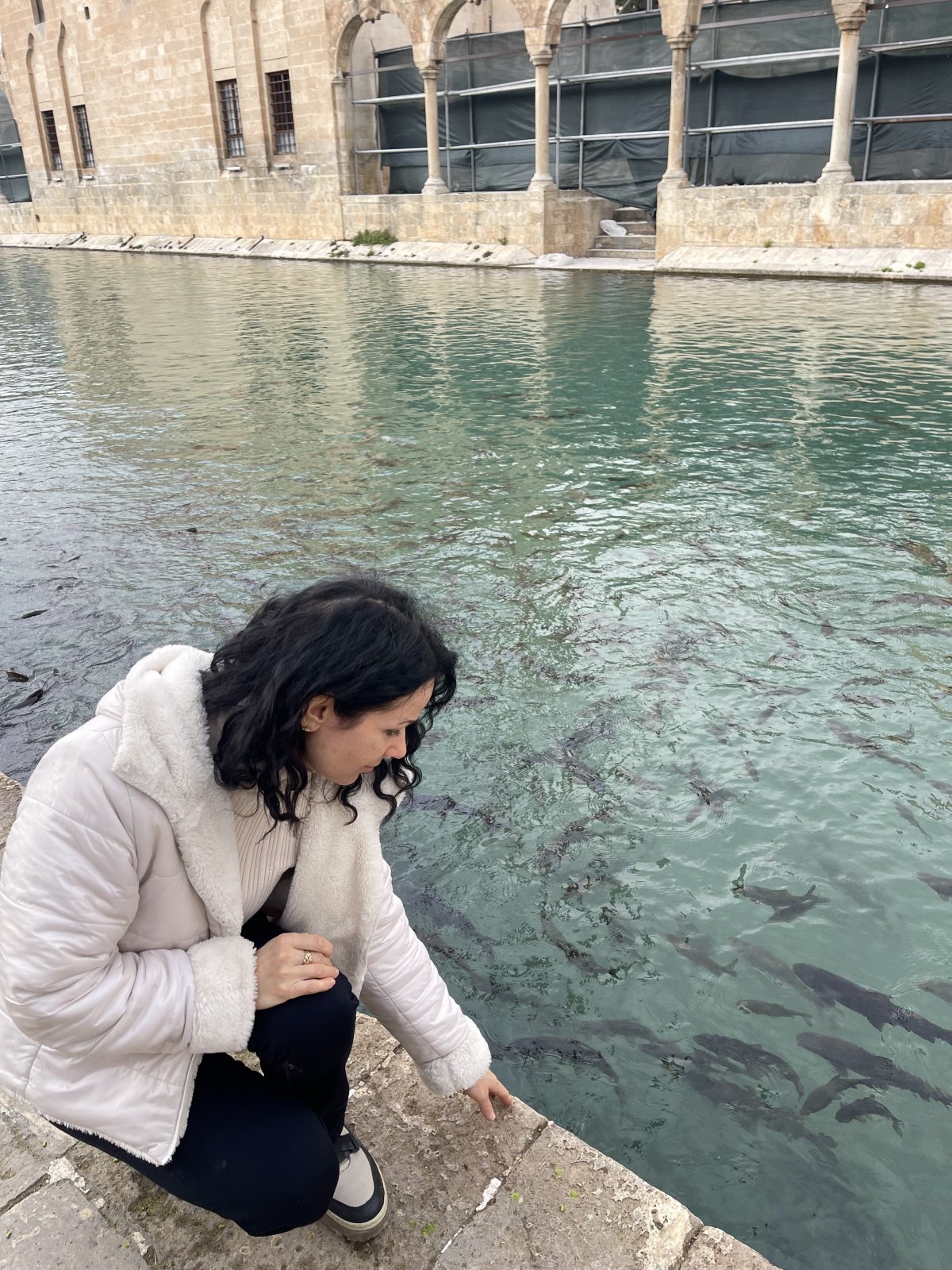
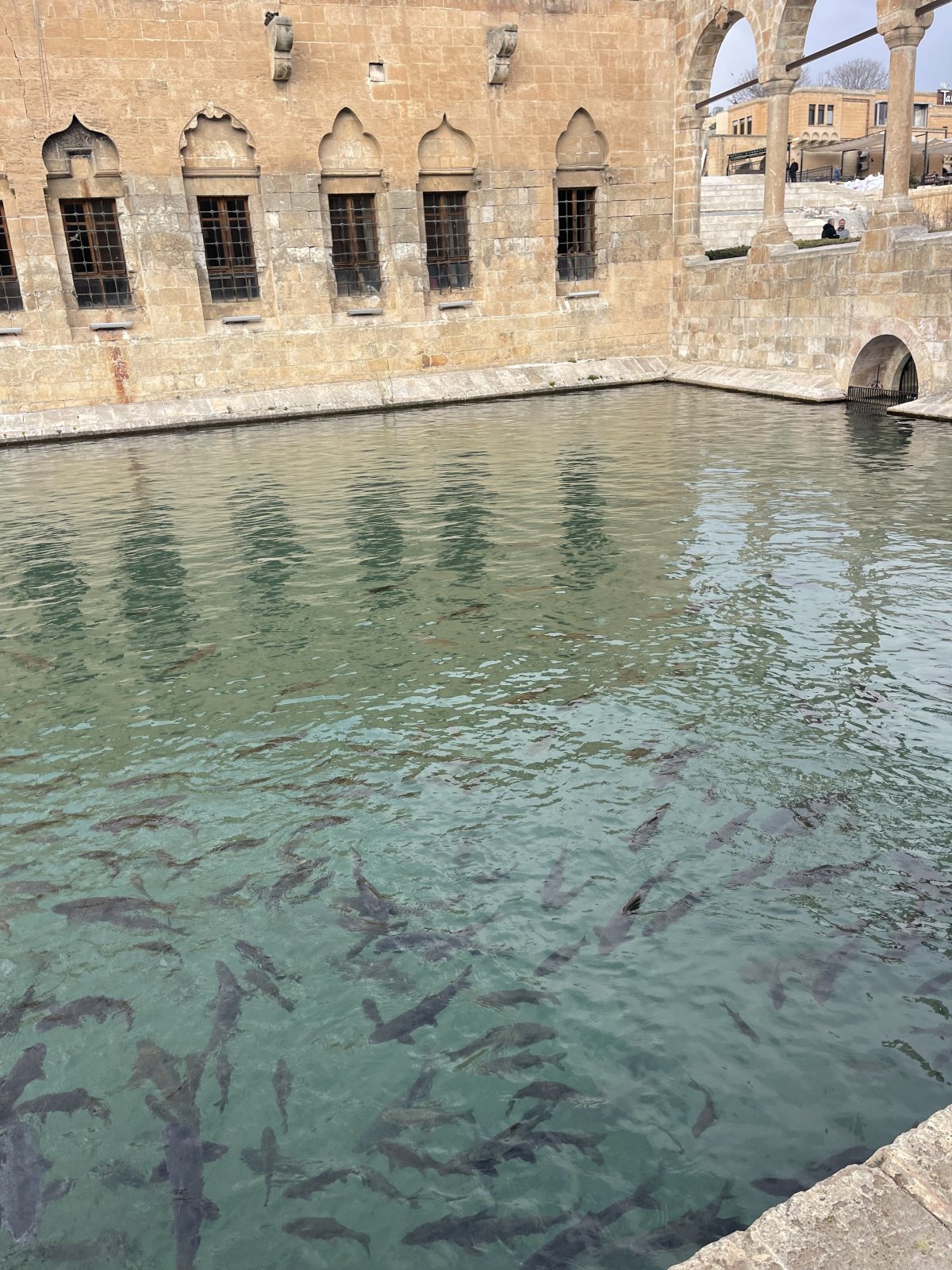
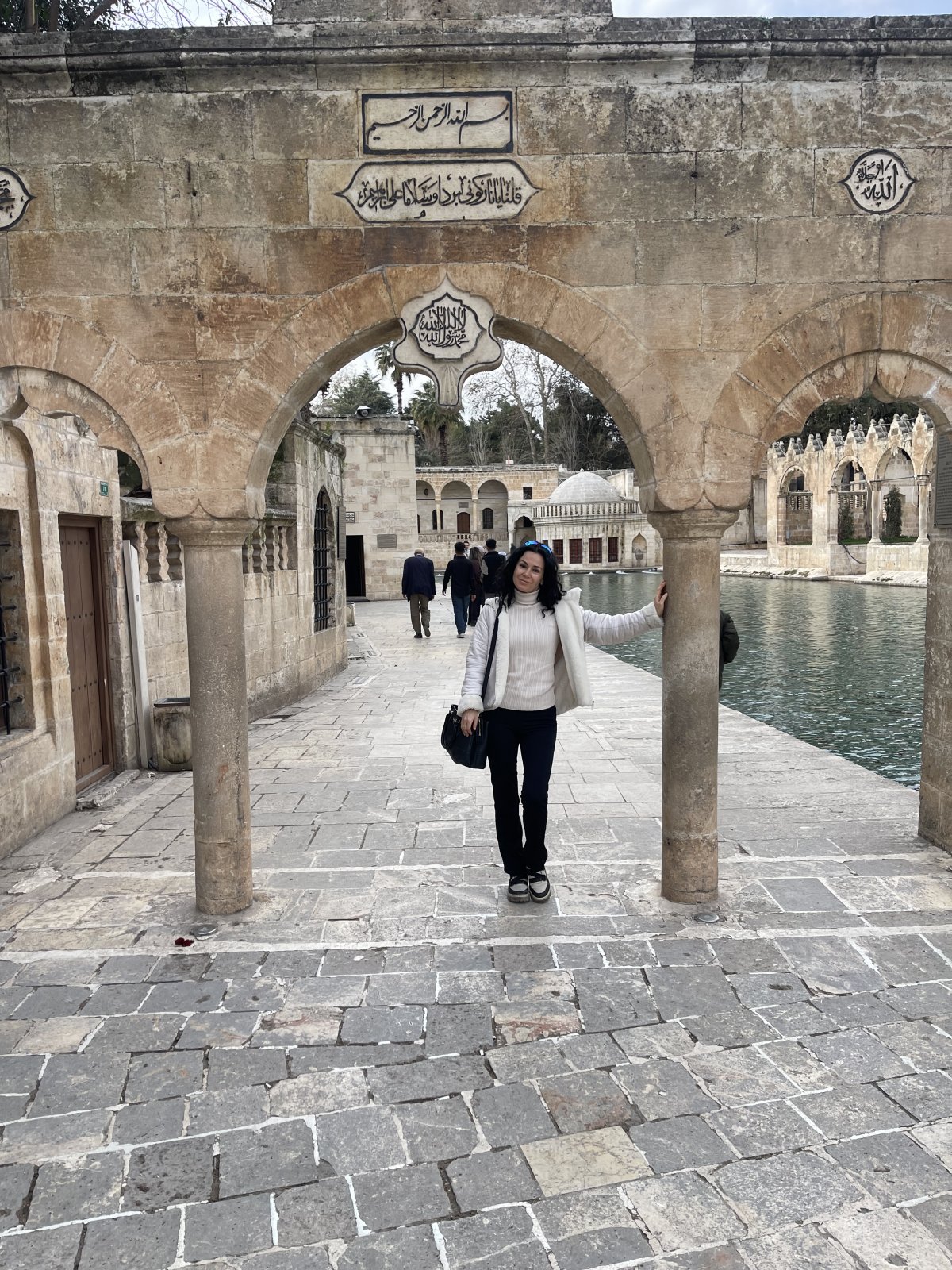
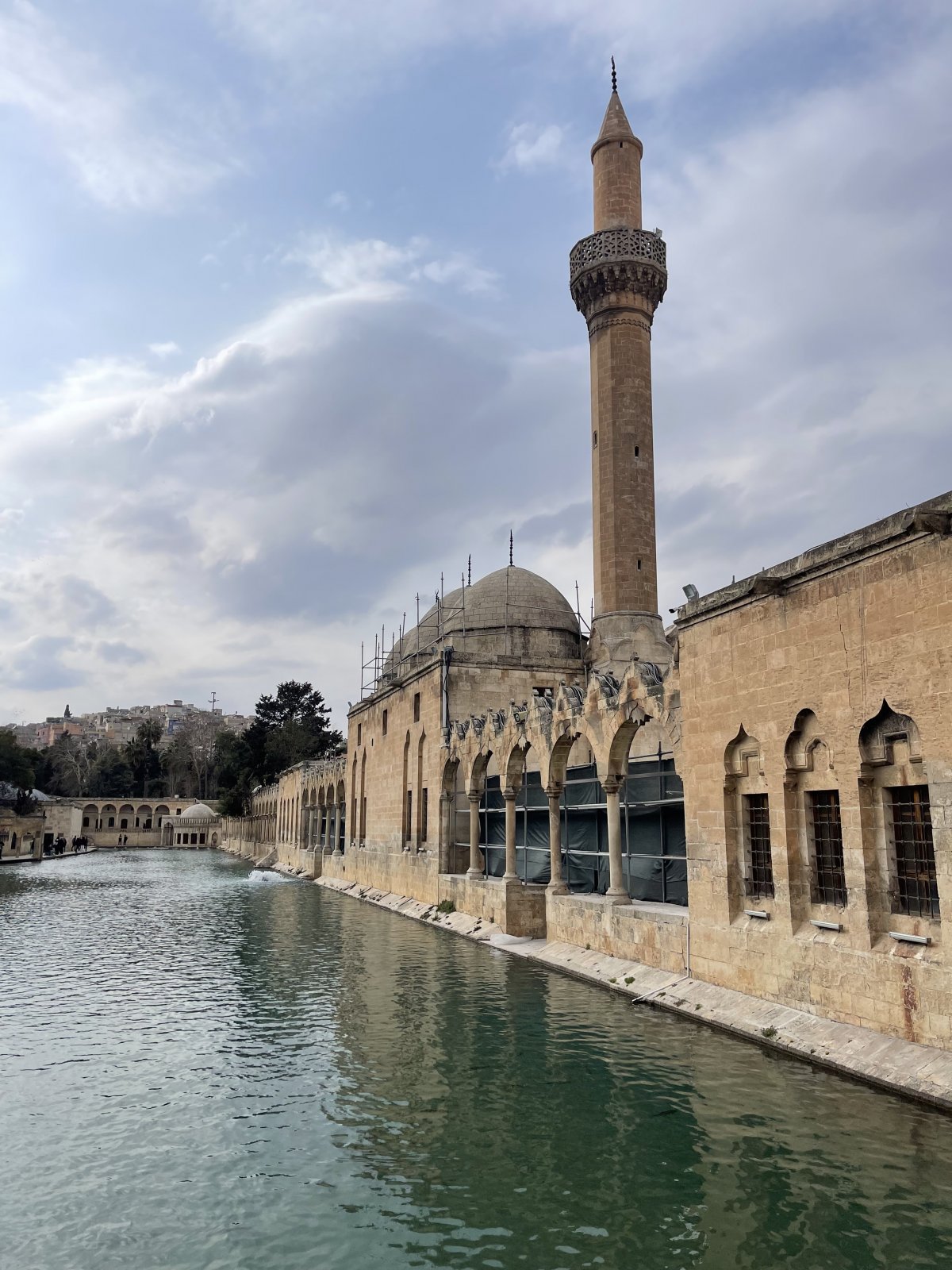
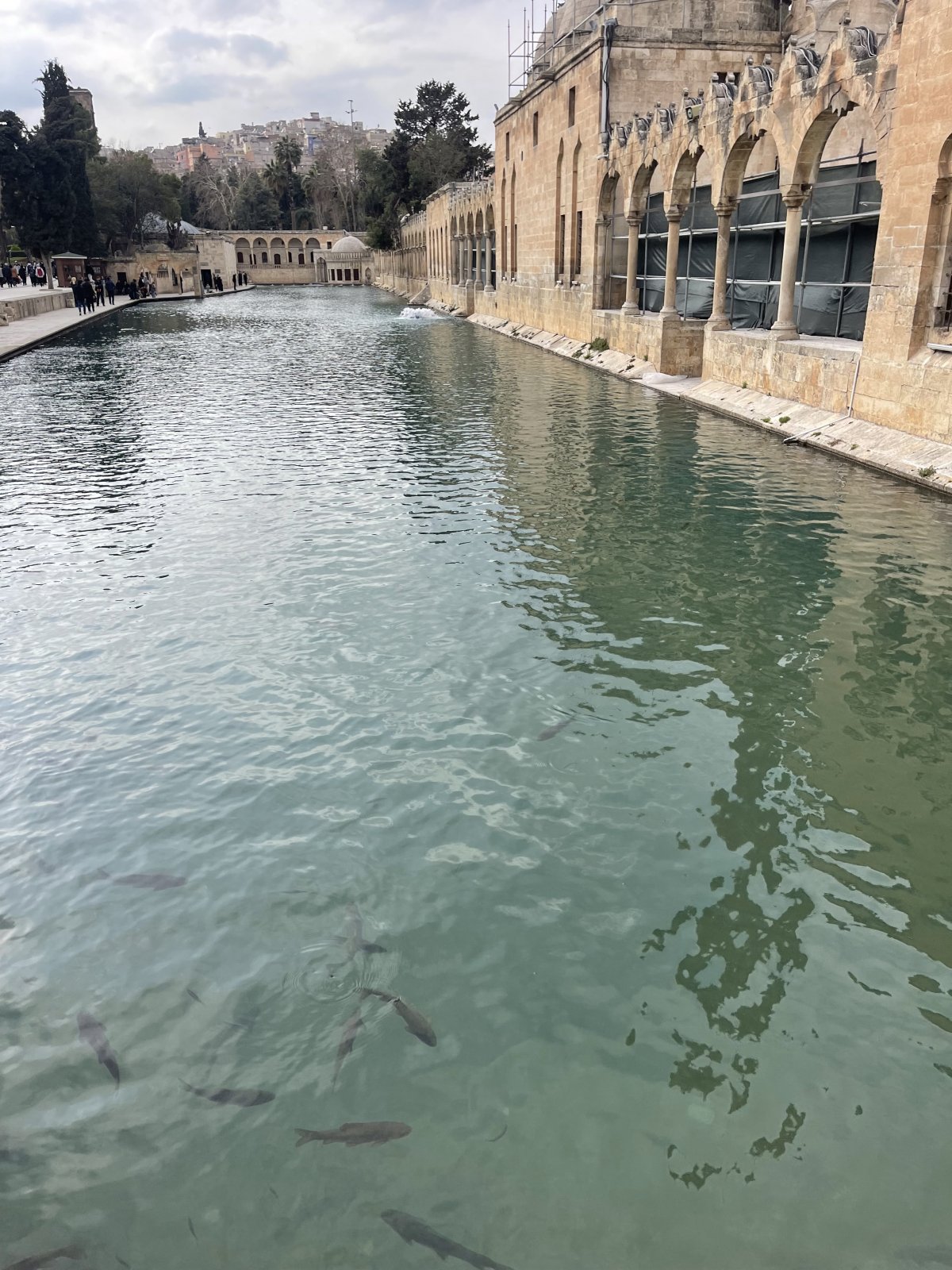
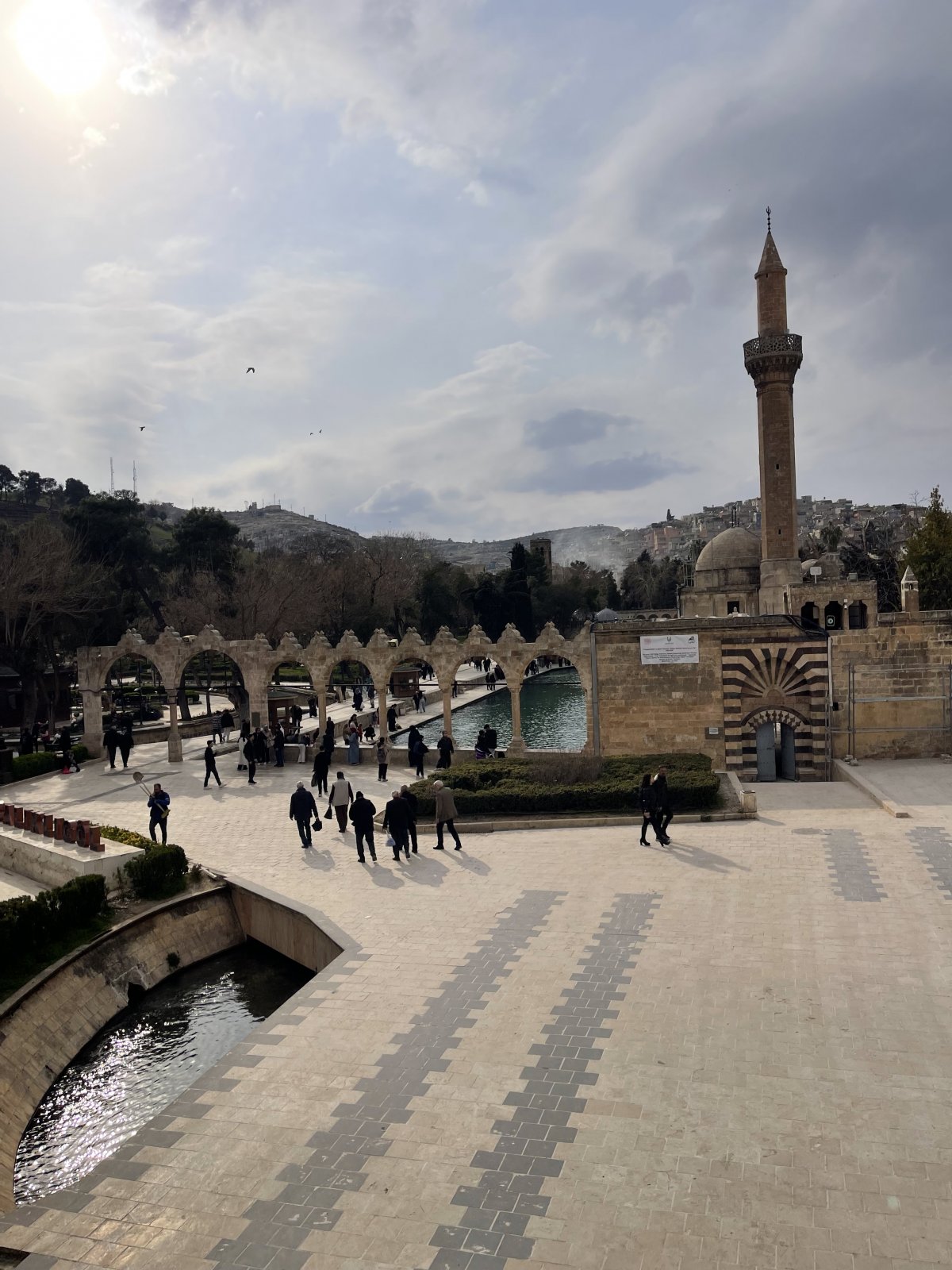
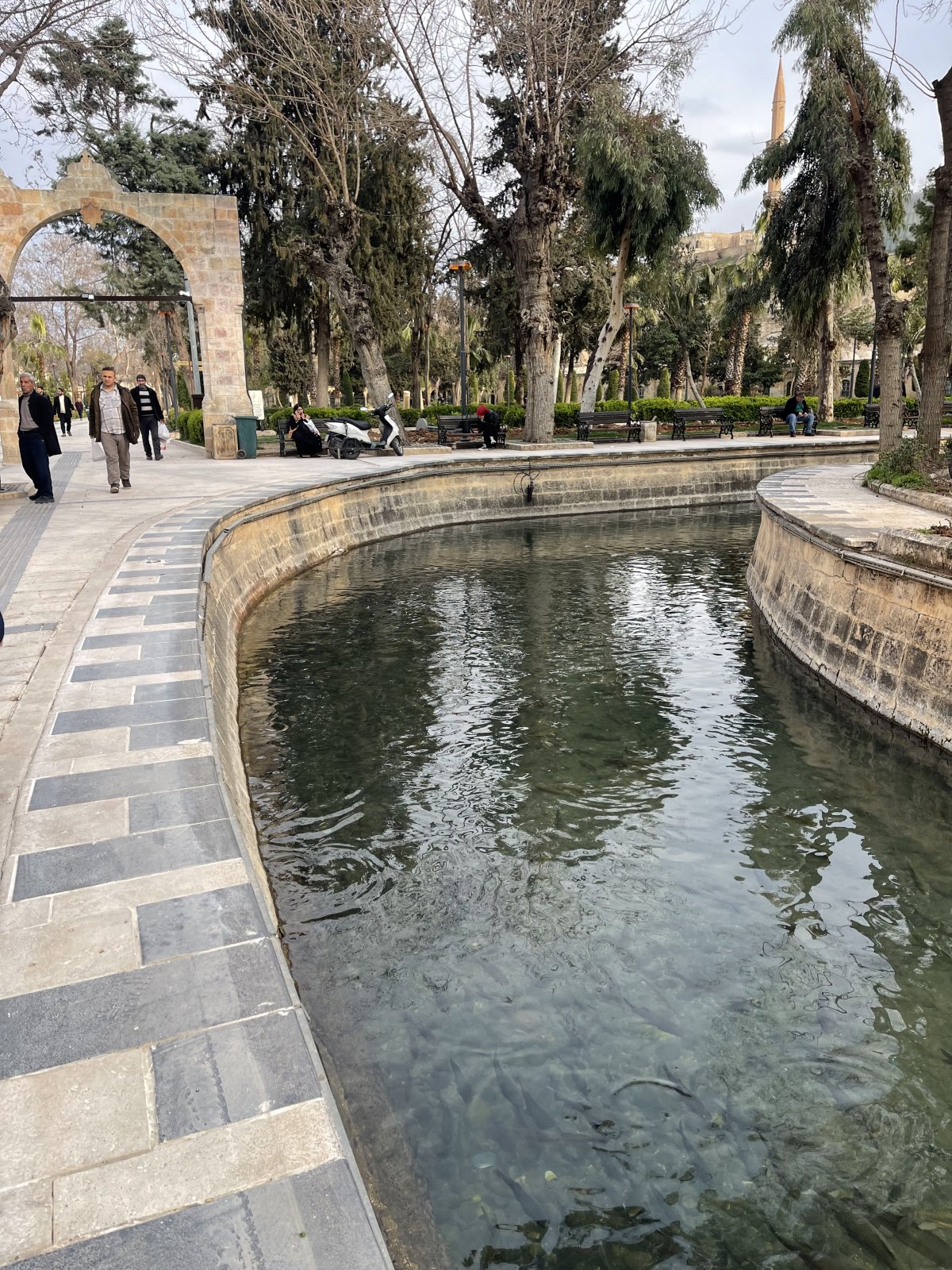
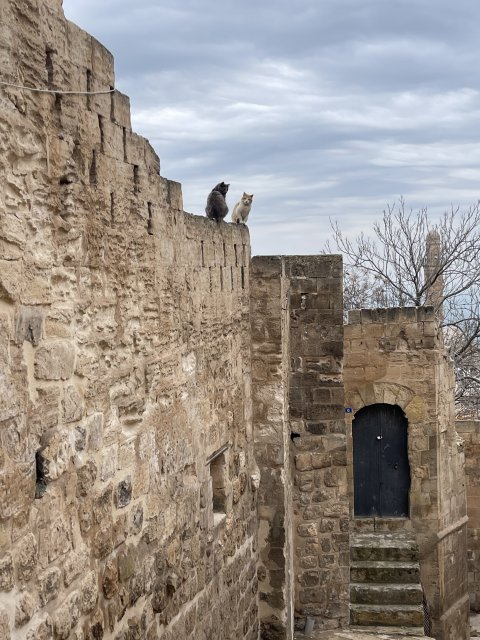
Nestled in the heart of Şanlıurfa’s old city, Balıklıgöl (also called Halil-ür Rahman Lake and Ayn-i Zeliha Lake) is a shimmering oasis surrounded by mosques, gardens, and historic stone architecture. The pools are home to sacred carp fish, which locals believe should never be eaten — a tradition rooted in centuries of faith and legend.
Legends & History
According to Islamic tradition, Prophet Abraham (Hz. İbrahim) was condemned by King Nimrod and thrown into a massive fire.
A miracle occurred: the fire turned into water, and the burning logs became fish. This divine event is believed to have taken place at Balıklıgöl.
The site also holds significance for Judaism and Christianity, as Abraham is considered the patriarch of all three monotheistic religions.
Archaeological evidence suggests the pools may have originated as pagan temples dedicated to the goddess Atargatis around 1000–300 BCE, later reinterpreted through Abrahamic traditions.
Location: Şanlıurfa city center, Eyyübiye district, Southeastern Türkiye.
Size: Halil-ür Rahman Lake is approx. 150m long, 30m wide, 3–5m deep.
Nearby Sites: The Cave of Abraham, where he is believed to have been born, lies adjacent to the pools and is a major pilgrimage site.
Visitor Experience
Atmosphere: Peaceful gardens, Ottoman-era mosques, and courtyards surround the pools, making it a serene place for reflection.
Sacred Fish: Visitors feed the carp but never catch or eat them, as they are considered holy.
Festivals: The site is especially crowded during religious holidays and nights of Mevlid and Kandil, when pilgrims gather.
Accessibility: Located in the city centre, Balıklıgöl is easily reached by foot, taxi, or local transport.
FAQ
1. Where is Balıklıgöl located?
Balıklıgöl is in the city center of Şanlıurfa, Southeastern Türkiye, within the Eyyübiye district. It is surrounded by mosques, gardens, and historic courtyards.
2. Why is Balıklıgöl famous?
It is known as the Pool of Abraham or Sacred Fish Lake, tied to the legend of Prophet Abraham being thrown into fire by King Nimrod. The fire turned into water, and the logs became fish — making the carp in the pool sacred.
3. Can visitors feed the fish at Balıklıgöl?
Yes, visitors often feed the carp with food sold nearby. However, the fish are considered holy and must never be caught or eaten.
4. What are the main attractions near Balıklıgöl?
Highlights include the Halil-ür Rahman Mosque, Ayn-i Zeliha Lake, and the Cave of Abraham, believed to be his birthplace.
5. Is there an entry fee to visit Balıklıgöl?
No, entry to Balıklıgöl is free. Visitors may pay small fees for guided tours or nearby attractions.
6. What is the best time to visit Balıklıgöl?
Evenings are especially atmospheric, with the pools illuminated and locals gathering. Spring and autumn offer mild weather, ideal for exploring Şanlıurfa’s old city.
7. How do I get to Balıklıgöl?
Balıklıgöl is centrally located in Şanlıurfa. It can be reached by taxi, local buses, or on foot from the old city. Şanlıurfa GAP Airport is about 35 km away.
8. Is Balıklıgöl important for different religions?
Yes, Balıklıgöl is sacred in Islam, Christianity, and Judaism, as Abraham is a patriarch in all three faiths.
Legends & History
According to Islamic tradition, Prophet Abraham (Hz. İbrahim) was condemned by King Nimrod and thrown into a massive fire.
A miracle occurred: the fire turned into water, and the burning logs became fish. This divine event is believed to have taken place at Balıklıgöl.
The site also holds significance for Judaism and Christianity, as Abraham is considered the patriarch of all three monotheistic religions.
Archaeological evidence suggests the pools may have originated as pagan temples dedicated to the goddess Atargatis around 1000–300 BCE, later reinterpreted through Abrahamic traditions.
Location: Şanlıurfa city center, Eyyübiye district, Southeastern Türkiye.
Size: Halil-ür Rahman Lake is approx. 150m long, 30m wide, 3–5m deep.
Nearby Sites: The Cave of Abraham, where he is believed to have been born, lies adjacent to the pools and is a major pilgrimage site.
Visitor Experience
Atmosphere: Peaceful gardens, Ottoman-era mosques, and courtyards surround the pools, making it a serene place for reflection.
Sacred Fish: Visitors feed the carp but never catch or eat them, as they are considered holy.
Festivals: The site is especially crowded during religious holidays and nights of Mevlid and Kandil, when pilgrims gather.
Accessibility: Located in the city centre, Balıklıgöl is easily reached by foot, taxi, or local transport.
FAQ
1. Where is Balıklıgöl located?
Balıklıgöl is in the city center of Şanlıurfa, Southeastern Türkiye, within the Eyyübiye district. It is surrounded by mosques, gardens, and historic courtyards.
2. Why is Balıklıgöl famous?
It is known as the Pool of Abraham or Sacred Fish Lake, tied to the legend of Prophet Abraham being thrown into fire by King Nimrod. The fire turned into water, and the logs became fish — making the carp in the pool sacred.
3. Can visitors feed the fish at Balıklıgöl?
Yes, visitors often feed the carp with food sold nearby. However, the fish are considered holy and must never be caught or eaten.
4. What are the main attractions near Balıklıgöl?
Highlights include the Halil-ür Rahman Mosque, Ayn-i Zeliha Lake, and the Cave of Abraham, believed to be his birthplace.
5. Is there an entry fee to visit Balıklıgöl?
No, entry to Balıklıgöl is free. Visitors may pay small fees for guided tours or nearby attractions.
6. What is the best time to visit Balıklıgöl?
Evenings are especially atmospheric, with the pools illuminated and locals gathering. Spring and autumn offer mild weather, ideal for exploring Şanlıurfa’s old city.
7. How do I get to Balıklıgöl?
Balıklıgöl is centrally located in Şanlıurfa. It can be reached by taxi, local buses, or on foot from the old city. Şanlıurfa GAP Airport is about 35 km away.
8. Is Balıklıgöl important for different religions?
Yes, Balıklıgöl is sacred in Islam, Christianity, and Judaism, as Abraham is a patriarch in all three faiths.