
Economic Leakage - An Uncomfortable Truth
With some OTA commissions reaching 45%, the gap between what travellers spend and what destinations keep has never been wider. A Glasgow-born entrepreneur living in Turkey believes the industry can fight back.
Every year, billions of pounds flow through the global tourism economy. A substantial portion of that money never reaches the destinations where tourism actually takes place. It does not vanish through waste or corruption. It drains away through the everyday mechanics of how travel is bought and sold online.
Online travel agencies, led by Booking.com, Expedia and their peers, solved a genuine problem when they first appeared. They offered smaller hotels and independent operators a level of visibility that would have been impossible to achieve alone. But the cost of that visibility has grown enormously. Commission rates now range from 15% at the low end to as much as 45%, with revenue processed offshore and contractual clauses that in many cases prevent operators from undercutting OTA prices on their own websites.
The result is a structural transfer of wealth away from the places where tourism happens and towards corporate platforms headquartered far from the beaches, mountains and city centres that travellers come to visit. This is economic leakage, and it matters far beyond the balance sheets of individual hotels. It undermines destination resilience, weakens the customer relationships that properties need to build loyalty, and erodes the financial foundations that make year-round tourism viable.
Martin Rosenberg has watched this dynamic play out at close quarters. A Glasgow-born entrepreneur who has lived in Antalya for the past two decades, he has observed Turkey’s extraordinary growth as a tourism destination alongside what he regards as a deepening dependency on intermediaries that extract more than they contribute.
“The travel industry has always had a certain amount of leakage,” he said in a recent interview for the Balancing Tourism Podcast. “Commissions were being paid, but it was usually around 10 to 15% with a tour operator. And you were getting something for that. It was a two-way conversation. There was an element of value.”
That equation, Rosenberg argues, has shifted dramatically. Where traditional travel agents earned their margin through advice, curation and a genuine service relationship, the OTAs have scaled the transactional side while stripping out the personal element. The commission has climbed, but the value exchange has narrowed.
The numbers are striking. A mid-range, hundred-room Mediterranean hotel charging roughly £100 per night and operating at reasonable occupancy could be generating around £2 million in annual revenue. At commission rates of 20 to 25%, that is £400,000 to £500,000 flowing out of the local economy every year from a single property. Scale that across a resort destination with hundreds of hotels, and the aggregate leakage is enormous. And Turkey’s hotels are frequently far larger than a hundred rooms.
“That’s not even a big hotel by Turkish standards,” Rosenberg pointed out. “You’ve got properties with 400, 500, 600 rooms. And then you’ve got the smaller places, the family-run guesthouses, where even a modest amount of leakage can be the difference between surviving and going under.”
The lost relationship
Beyond the raw financial cost, there is a subtler but arguably more damaging consequence: the loss of the customer relationship. It is the hotel that greets the guest, serves the meals, and delivers the experience. Yet it is the OTA that holds the transactional relationship and owns the data.
Rosenberg is blunt about the industry’s role in allowing this to happen. Hotels, he believes, have too often failed to engage meaningfully with their own guests.
“It’s very rare that I’ve checked into a hotel, stayed for a week, and left after someone has actually sat down and had a conversation with me,” he said. “They might provide a service, give me a nice meal, take money from me at the spa. But nobody is building a relationship. And that’s a big failing.”
The consequences compound over time. Repeat guests continue booking through OTAs because nobody at the hotel thought to convert them to direct bookers. The CRM flags a returning customer, but the front desk never acts on it. The commission bleeds out again and again for the same guest, with the hotel paying each time for a relationship it could have owned.
How did we get here?
Rosenberg traces the roots of the problem to the late 1990s, when the internet first opened up new marketing possibilities. Hotels, he recalls, treated their websites as digital brochures and assumed that simply having an online presence would generate bookings. They cut their marketing budgets, neglected SEO, and failed to promote their own channels. The OTAs, by contrast, invested aggressively in digital marketing and filled the vacuum.
“The OTAs came along at exactly the right time,” Rosenberg said. “They became clever marketers. The hotels sat back and thought, the bookings are coming in through the OTAs, so we don’t really need to do much anymore. They cut back on their own marketing spend, and that’s when the dependency set in.”
He cited industry commentators who suggest hotels should be investing five to seven per cent of turnover in marketing. Most, he said, are spending three per cent or less. That gap has allowed OTAs to consolidate their grip.
Legal challenges have done little to alter the balance. Rate parity clauses have been contested across Europe, and class actions have been filed against major OTAs in several countries. But Rosenberg sees a paradox in the approach. Hotels are suing the platforms they continue to depend on for distribution, and any penalties imposed will likely be funded by the very commissions those hotels are paying in the interim. “You’re actually paying for them to be able to pay you back,” he observed.
A video-first alternative
Rosenberg’s response has been to build Overseas Info TV, a zero-commission, video-first discovery platform designed to connect travellers directly with hotels and tour operators. The idea, which he first conceived in 2008, was rooted in a simple observation: families spending £5,000 or more on a holiday deserve to see what they are actually getting, and video delivers a level of honesty that photographs and written reviews cannot match.
“Photographs can be doctored,” he said. “And most hotel photos are dead. Empty dining rooms, empty bars, empty pools. Video brings it all to life. People want reality. They’re not looking for full-blown productions.”
He pointed to the problem of fake reviews as further justification for the video approach, noting that TripAdvisor itself has acknowledged finding around two million fraudulent reviews per year. Video, while not entirely immune to manipulation, raises the bar considerably.
The platform operates on a flat annual fee rather than commission, with three pricing tiers starting at €300. The logic, Rosenberg explained, is that an upfront commitment encourages hotels to actively participate, whereas a commission-only model creates passivity. “If they’re only paying when an OTA sells a room, what are the hotels actually doing? There’s no partnership in that. Good business is where both sides work together.”
The AI question
The rise of AI-powered booking agents introduces a new dimension to the debate. As tools such as ChatGPT, Gemini and Perplexity begin to influence how travellers research and eventually book their holidays, the question of who captures that relationship becomes urgent.
Rosenberg acknowledged that the major OTAs will invest heavily to ensure AI agents route traffic through their platforms. But he sees a window for properties and smaller platforms that invest in their own AI-readiness. He noted that despite its modest scale, Overseas Info TV has performed well in AI visibility checks, with ChatGPT in particular citing the platform’s video content, independence and direct-booking model as reasons for recommendation.
Whether AI agents will ultimately entrench OTA dominance or open new pathways for direct booking remains an open question. But Rosenberg’s view is clear: hotels that fail to invest in their own digital presence and AI optimisation will find themselves locked out of yet another distribution channel. “They can intercept it,” he said of the AI opportunity, “but they have to put the effort in.”
A sustainability argument
There is a growing case for framing direct booking as a matter of social responsibility. When a traveller books through an OTA, a significant share of their spending exits the destination economy before it can circulate locally. That money does not pay local taxes, employ local staff, maintain local infrastructure or fund the services on which both residents and visitors depend.
Turkey has already taken regulatory action, restricting domestic OTA bookings in part to prevent locally earned income from flowing offshore to platform shareholders. These conversations, Rosenberg noted, are now playing out across Europe and beyond.
“It’s all about sustainability,” he said. “I’m a businessman. If you make an investment and grow a business, of course you’re entitled to make money. But it should be fair.”
The direct booking movement may not displace the OTAs. Rosenberg is realistic about that. But he believes incremental change is both possible and necessary, and that governments, destination management organisations and the industry at large need to start treating economic leakage with the seriousness it deserves. It is, as he put it, a conversation too many conferences are reluctant to have, for fear of upsetting the major platforms.
If tourism is to become genuinely sustainable, the flow of money through the system matters as much as the flow of visitors. And right now, far too much of it is draining away.
___
To learn more about Overseas Info TV and its zero-commission discovery platform, visit www.overseasinfo.tv
This article is based on an interview with Martin Rosenberg for the Balancing Tourism Podcast.
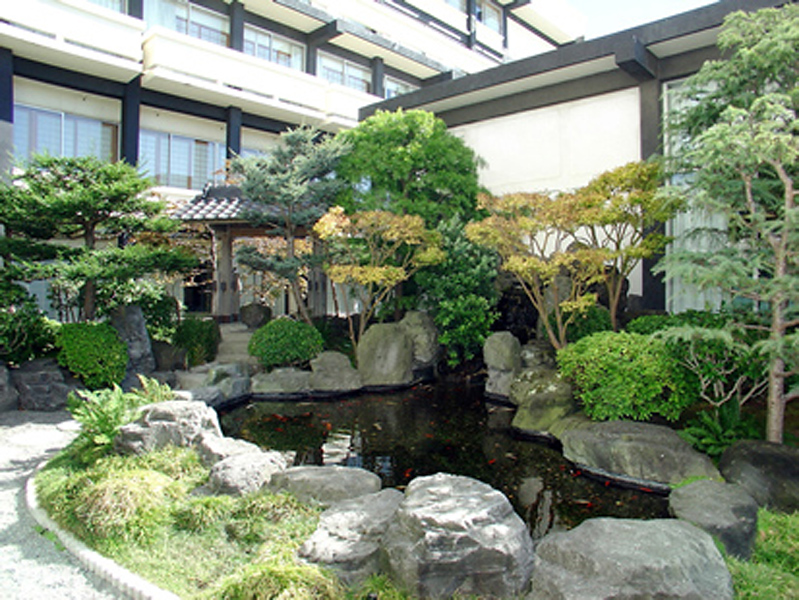
Hotel Kabuki
0 Video | 47 Photo | 0 Comment
Ask MeLocation
This hotel is set in the vibrant area of San Francisco’s Japantown. It is surrounded by an abundance of spas, sushi bars and restaurants. The property is just a few steps from the fashionable Filmore Street, and the historic Filmore Theater.
Facilities
218 non-smoking rooms are available to guests at this hotel, which includes a lift and a reception desk. To ensure guests a comfortable and relaxing stay, the hotel provides various services and facilities, including a safe, room service, a conference room and a business centre. Wireless internet access allows guests to stay connected while on holiday. Wheelchair-accessible facilities are available. A garden provides extra space for rest and relaxation in the open air. Guests arriving by car can park their vehicles in the garage or in the car park.
Rooms
Air conditioning and central heating ensure that rooms maintain comfortable temperatures. A balcony is included as standard in some rooms. Rooms have a double bed or a king-size bed. A safe and a minibar are also available. Additional features include a refrigerator and a tea/coffee station. An ironing set is provided for guests' convenience. Other features include a telephone, a TV, a radio, an alarm clock and WiFi. A hairdryer and bathrobes are available in the bathrooms, which are equipped with a shower. Family rooms are available for parents with children.
Sports/Entertainment
The sports and entertainment facilities at the hotel ensure that guests have plenty of activities to choose from during their stay. Leisure activities and facilities at the hotel include a gym or, for a fee, a spa. A nightclub offers fun and entertainment.
Meals
Dining facilities include a restaurant, a dining room, a breakfast room and a bar.
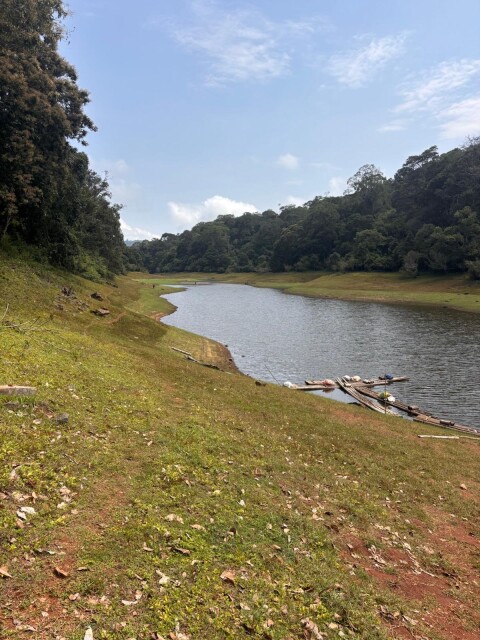
Periyer Tiger Reserve
4 Video | 16 Photo | 1 Comment
Ask Me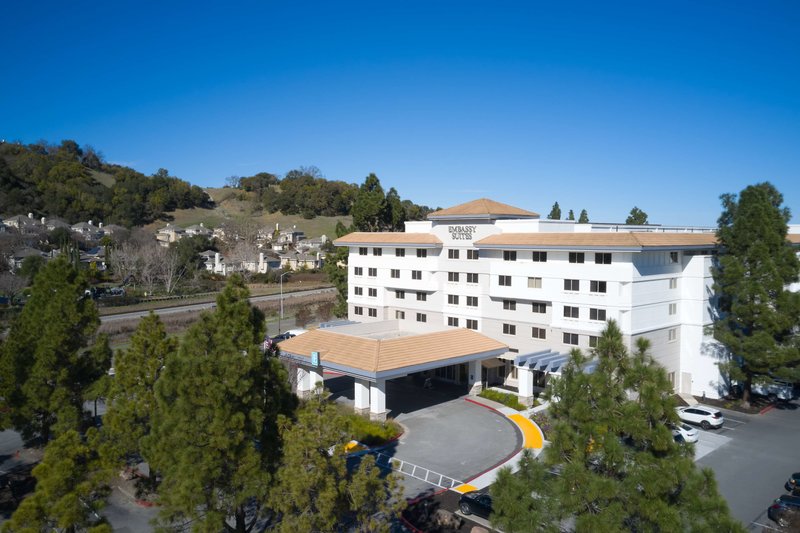
Embassy Suites San Rafael Marin County
0 Video | 39 Photo | 0 Comment
Ask MeLocation
This hotel is located in San Rafael. The nearest airport is San Francisco - International (SFO).
Facilities
Guests have a choice of 235 rooms. Services and facilities include room service, a conference room and a business centre. Wireless internet access (for a fee) allows guests to stay connected while on holiday. Guests arriving by car can park their vehicles in the car park.
Rooms
Rooms are equipped with air conditioning. The rooms have a double bed and a sofa bed. Additional features include a refrigerator, a microwave and a tea/coffee station. A telephone, a flatscreen television and WiFi (for a fee) are provided as well. Bathrooms are equipped with a whirlpool bath and a hairdryer. The hotel has 236 non-smoking rooms.
Sports/Entertainment
The sports and entertainment facilities at the hotel ensure that guests have plenty of activities to choose from during their stay. The indoor pool complex is ideal for relaxation and exercise. The hot tub in the pool area promises pure relaxation. After an eventful day, guests can work out and recharge in the gym.
Meals
Bed and breakfast can be booked.
The Stunning Turkish Town Of Fethiye
1 Video | 0 Photo | 0 Comment
Ask Me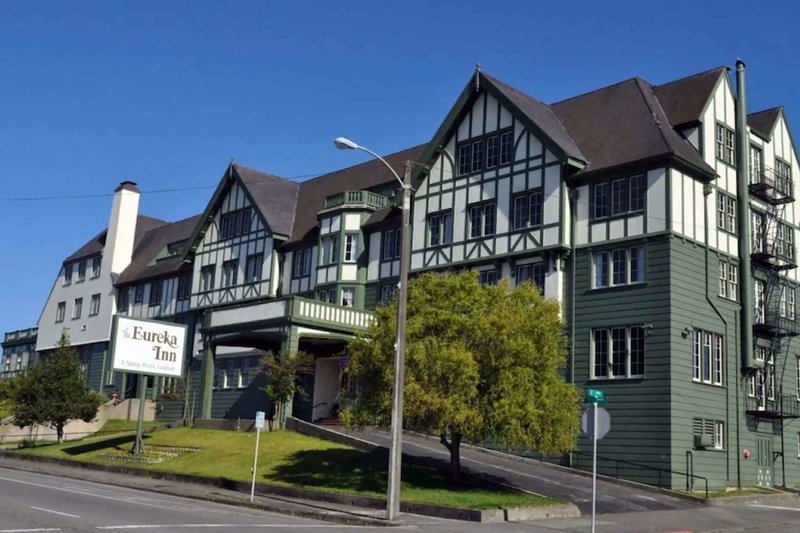
Eureka Inn
0 Video | 10 Photo | 0 Comment
Ask MeLocation
This hotel is located right in the heart of Eureka.
Facilities
104 rooms are available to guests at this hotel, which includes a lift and a reception desk. To ensure guests a comfortable and relaxing stay, the hotel provides various services and facilities, including a transfer service, a conference room and a business centre. Wireless internet access allows guests to stay connected while on holiday. Guests arriving by car can park their vehicles in the car park.
Rooms
Rooms include a double bed. Guests will also find a refrigerator included among the standard features. A telephone, a flatscreen television and WiFi are provided as well. A hairdryer is provided in the bathrooms. The hotel has non-smoking rooms.
Sports/Entertainment
The sports and entertainment facilities at the hotel ensure that guests have plenty of activities to choose from during their stay. The outdoor pool complex provides invigorating refreshment. For those who wish to stay active while on holiday, the hotel offers golf.
Meals
Dining facilities include a restaurant, a dining room and a bar. Bed and breakfast can be booked. A continental breakfast guarantees a great start to the day.
Coral Sands Motel
0 Video | 13 Photo | 0 Comment
Ask MeLocation
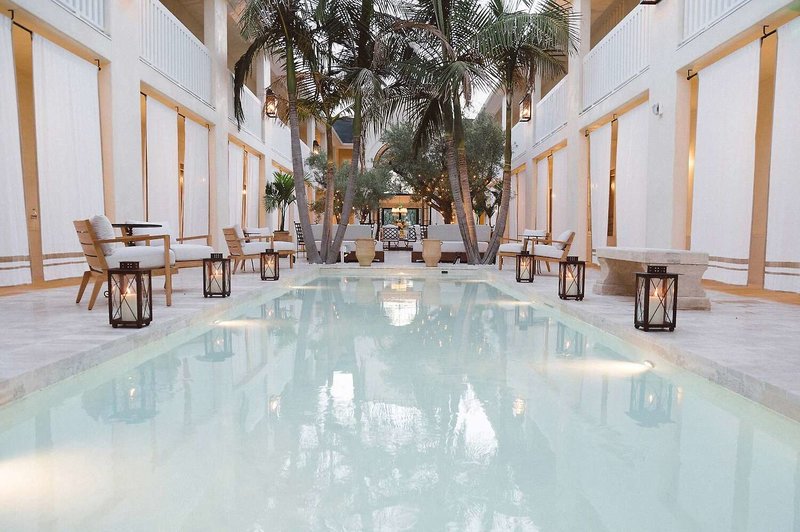
This motel is located in Hollywood. The nearest airport is Los Angeles - International (LAX).
Facilities
60 rooms are available to guests at this motel, which includes a reception desk. The motel provides a baggage storage service and a theatre hall. Wireless internet access is provided in public areas. Guests arriving by car can park their vehicles in the car park.
Rooms
A double bed ensures a good night's sleep. Valuables can be securely stored in a safe. For guests' convenience, units include a refrigerator and a tea/coffee station. An ironing set is provided for guests' convenience. Other features include a telephone and WiFi. Bathrooms are equipped with a shower and include a hairdryer.
Sports/Entertainment
Guests can enjoy a selection of sport and entertainment options. The outdoor pool complex provides invigorating refreshment.
Travelodge Los Banos
0 Video | 13 Photo | 0 Comment
Ask MeLocation
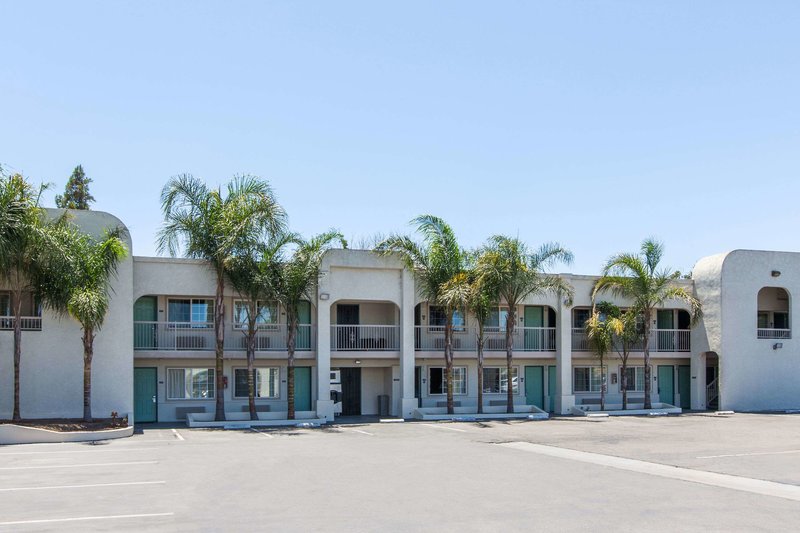
This hotel is located in Los Banos. The nearest airport is San Jose - Municipal (SJC).
Facilities
The hotel has 35 rooms. Wireless internet access allows guests to surf the internet and catch up on email. The hotel has wheelchair-accessible facilities. Guests arriving by car can park their vehicles in the car park.
Rooms
Air conditioning ensures that rooms maintain comfortable temperatures. Rooms include a double bed. A refrigerator, a microwave and a tea/coffee station are standard features. A telephone, a TV and WiFi provide all the essentials for a comfortable holiday. A hairdryer is provided in the bathrooms. The hotel has non-smoking rooms and smoking rooms.
Sports/Entertainment
Sporty guests can enjoy golf.
Meals
A continental breakfast guarantees a great start to the day.
Leonardo boutique hotel
0 Video | 2 Photo | 0 Comment
Ask Me

Maclean Bruce
0 Video | 1 Photo | 0 Comment
Ask Me
Western Wall
2 Video | 0 Photo | 1 Comment
Ask Me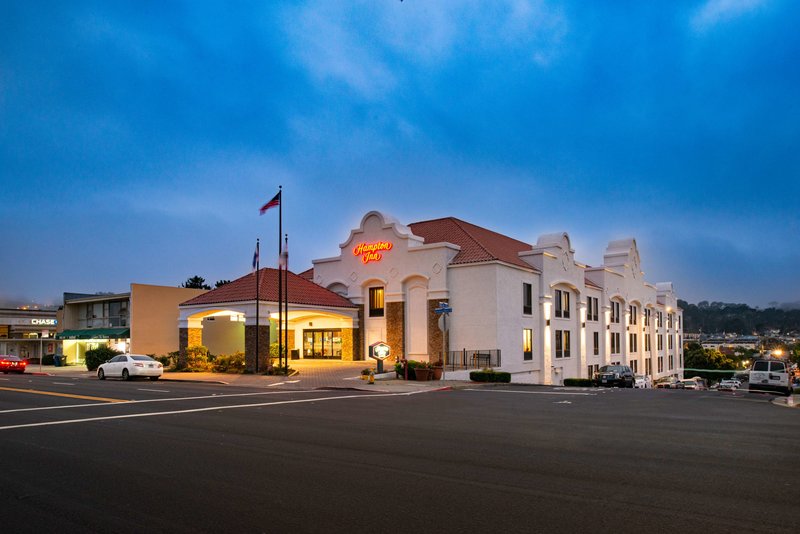
Hampton Inn San Francisco
0 Video | 25 Photo | 0 Comment
Ask MeLocation
This hotel is located in Daly City. The nearest airport is San Francisco - International (SFO).
Facilities
The hotel has 86 non-smoking rooms. The hotel provides a conference room and a business centre. Internet access is available to guests in public areas. Guests arriving by car can park their vehicles in the car park.
Rooms
Air conditioning ensures that rooms maintain comfortable temperatures. Rooms include a sofa bed. A desk is provided. A refrigerator and a tea/coffee station are standard features. An ironing set is provided for guests' convenience. A TV comes as standard in the rooms. A hairdryer is provided in the bathrooms.
Sports/Entertainment
The sports and entertainment facilities at the hotel ensure that guests have plenty of activities to choose from during their stay. Excellent swimming awaits guests at the indoor pool. After an eventful day, guests can work out and recharge in the gym.
Meals
Bed and breakfast is offered as a catering option. A generous breakfast buffet guarantees a great start to the day.
Thon Hotel Europa
0 Video | 6 Photo | 0 Comment
Ask MeLocation
This city and conference hotel enjoys a convenient location in the centre of Oslo, close to all major attractions and shopping areas. The parliament, the Royal Castle, the National Gallery, and the ministries are all within walking distance of the establishment, and guests will also find a number of shops nearby. The bus station is approximately 5 minutes' walk away and the train station some 500 metres from the accommodation.
Facilities
The hotel has a lift and features 168 rooms. The reception desk in the lobby is staffed round the clock. Services and facilities include room service and a conference room. Wireless internet access is provided in public areas. There are a number of shops as well. Guests arriving by car can park their vehicles in the garage or in the car park.
Rooms
A minibar is provided. Features include a mini fridge and a tea/coffee station. Other features include a telephone, a television with satellite/cable channels and WiFi. A hairdryer is available in the bathrooms. The hotel has 138 non-smoking rooms.
Meals
Various dining options are available, including a restaurant, a dining room and a bar. Bed and breakfast can be booked. In addition to breakfast, the hotel also offers lunch and dinner à la carte.
Payment
The hotel accepts payment by VISA.
Every Tourist or visitor attraction can apply for a Free Sponsor Ad for a minimum period of 12 months
By doing so they agree to a link exchange on their website between their company and Overseasinfo.tv, likely on the same page as their Social Media links. We will provide artwork. And we ask this is completed within 4 weeks.
Exclusions to this are Government Agencies, Tourist Boards and not-for-profit organisations who will be granted indefinite Sponsor Ads on our platform WITHOUT the need for a link exchange.
Other exclusions will be considered upon application to sponsorads@overseasinfo.tv
By completing the application for a Sponsor Ad you agree to the above continue with Application.
This email is already Registered
If you are trying to upload a number of properties/ experiences, etc for a Sponsored Ad, please email sponsorads@overseasinfo.tv
Also email us if you wish to increase your current limit or extend your period for a Sponsored Ad
